Odoo as a Living Ecosystem
The ERP, if it wants to remain relevant, must stop being just a repository of the past and become the engine of the present.
Code and Soul
Engineering Team

For decades, ERP was seen as the back-office of business: the place for accounting, inventory, purchasing, silent operations that rarely surfaced in customer experience. A rigid, procedural environment, designed to structure, not to decide. But this model didn't survive the current speed of consumption cycles, channel fragmentation, and the emergence of interfaces that need to interpret user signals in real time.
This is exactly where Odoo stands apart. It is not just a management system: it is a living ecosystem, modular, expandable and deeply integrated with the logic of modern business. And when connected to a cognitive decision layer, it stops being a system of record and becomes a platform for operation and intelligence.
Odoo is an organism, not software
The biggest illusion about ERPs is imagining them as monolithic, giant, inflexible suites, a necessary evil to operate. Odoo dismantles this logic by being born modular, composable, and organic. It grows as the company grows. It expands capabilities as new flows emerge.
Odoo doesn't "impose" a mental model. It absorbs the company's model and structures it. Odoo behaves less like a system and more like a living organism.
That is why businesses as different as bars, factories, e-commerce operations, gyms, fintechs and logistics companies can use it as a base without deforming their natural processes. Odoo behaves less like a system and more like a living organism, where each module is a functional organ.
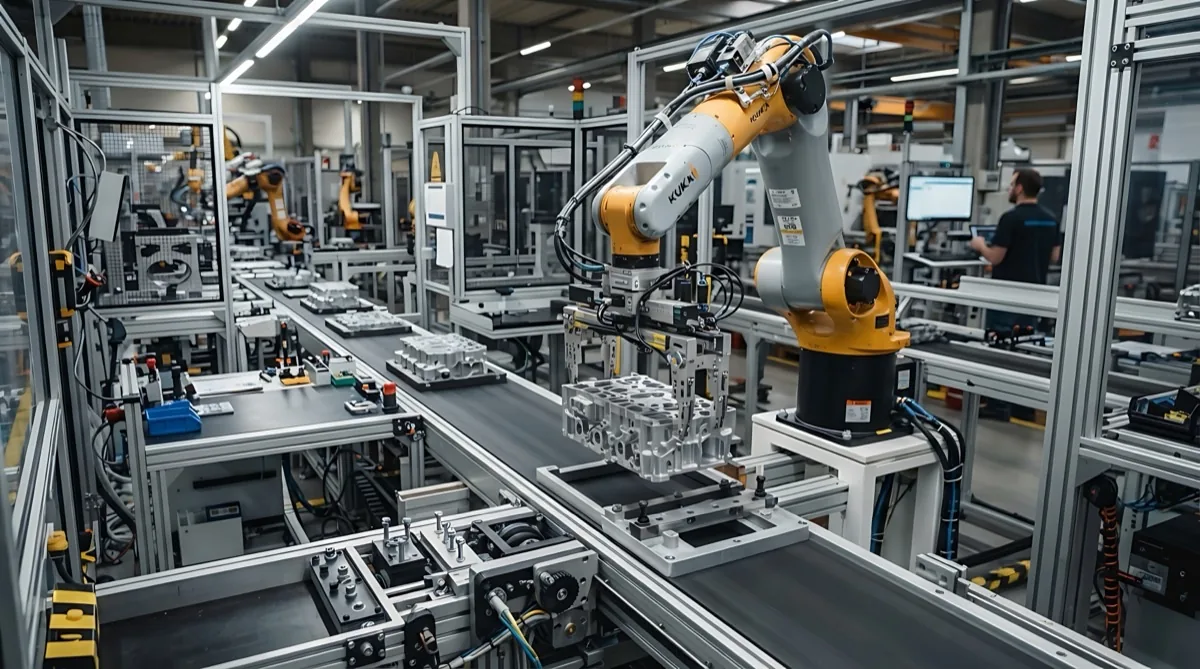
The ERP stopped being a place where things go, and became the place where things happen.
ERP stopped being the end of the line — and became the beginning of intelligence
Previously, the flow was: behavior → external system → decision → ERP records. Today, this logic has collapsed. The company needs the ERP to identify patterns, alert deviations, connect signals from multiple sources, trigger automations, personalize offers, and adjust operations before they break.
ERP stopped being a place where things go, and became the place where things happen.
With Odoo, that transition is natural. It does not only store: it relates, calculates, observes, integrates and reacts. The modular structure makes it easier to reprogram the ERP for emergent behaviours, not just for static rules.
A modern ERP needs to be a decision platform
Decision is the new scarce resource. Companies are drowning in data, dashboards, disconnected KPIs, vanity metrics, and analyses no one reads. What's missing isn't information, it's interpretation. It's transforming scattered signals into coherent action at the exact moment it matters.
Odoo, being modular and reprogrammable, connects perfectly to the logic of a decision layer. It's no longer just ERP. It's a central nervous system for automated decisions.

An order placed at the POS triggers personalisation in digital, and an absence of purchase fires predictive rules.
Odoo's great advantage isn't the number of modules — it's the coherence between them
Many "complete" systems suffer from too many disconnected pieces: CRM thinks one way, inventory another, marketing another, POS another. Integrations solve part of the problem but create another: dependency on fragile connectors, delay cycles, and logic duplication.
Odoo starts from a more robust principle: a single source of truth, a single logical structure, a single way of thinking about data.
That removes rework, mismatched information, diverging rules, slow synchronisations and "islands of automation". The final experience, in service, on mobile, in digital, in physical, in operations, becomes coherent because everything speaks the same language.
Odoo solves a problem almost no one wants to admit: operational chaos
Every company has parallel spreadsheets, informal processes, shortcuts, holes, misaligned departments, data no one trusts 100%, and gaps between digital and physical. Odoo, when well implemented, does more than organize: it exposes the structural failures that were always there.
An ERP becomes a mirror: it reveals where the company needs to change. And where automation can reduce cognitive load, friction, and cost.
When connected to a cognitive engine, Odoo evolves from ERP to adaptive platform
Odoo connected to a cognitive engine isn't ERP with superficial automation. It's a living organism capable of interpreting and acting: demand forecasting based on real behavior, POS recommendations based on customer cluster, personalized digital experiences connected to inventory.
This reconfigures the role of ERP: it stops being the end of the chain and becomes the decision center.
And few global ERPs are ready for that without relying on fragile and expensive integrations.
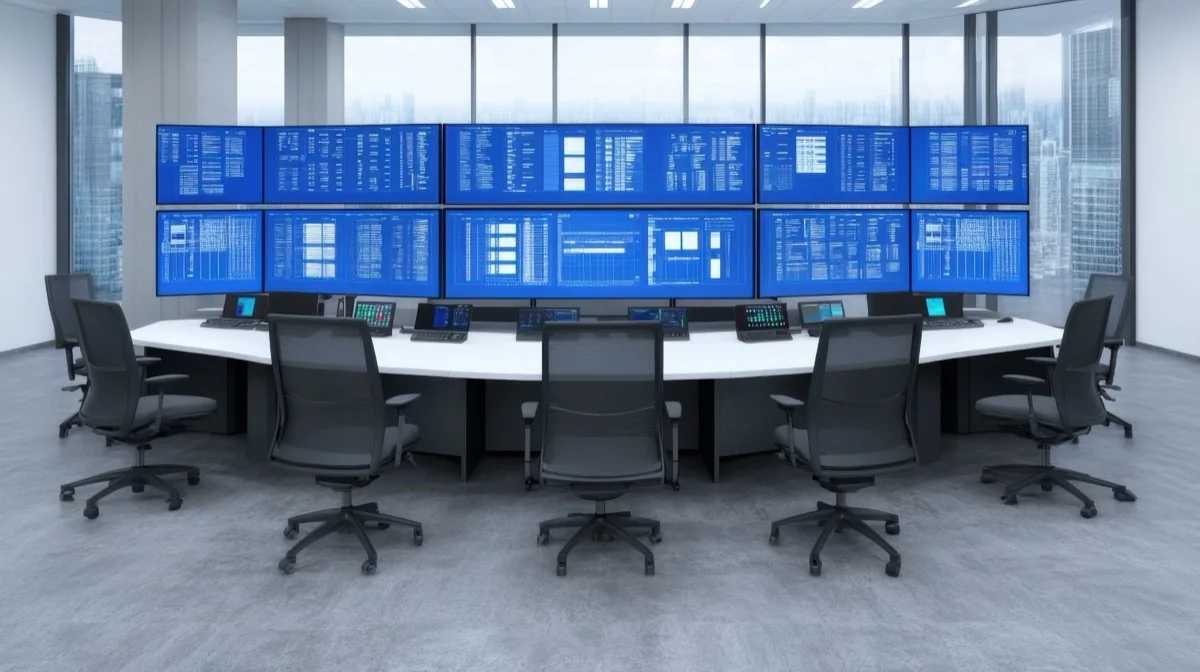
The value is not only in the ERP. It is in the decision architecture it enables.
Strategic Odoo implementation in modern ecosystems
Odoo is treated as strategic business infrastructure, designed alongside strategy, deeply integrated with digital, connected to the decision layer, replacing repetitive work with intelligent automation, creating unified experiences between physical and digital.
The value is not only in the ERP. It is in the decision architecture it enables when configured properly, with no shortcuts, no disposable solutions, no improvising.
Conclusion: Odoo is the first truly living ERP
Most ERPs try to adapt to the modern world by repeating the past. Odoo follows the opposite path: it was created to be adaptable from the origin. And when connected to a cognitive engine, it transforms into what every ERP should be, but almost none achieved.
Not just record, but interpret. Not just organize, but anticipate. Not just integrate, but decide. Not just react, but personalize. Not just operate, but evolve. This is what makes Odoo a living ecosystem.
"Not just record, but interpret. Not just organize, but anticipate. Not just integrate, but decide. Not just react, but personalize. Not just operate, but evolve. This is what makes Odoo a living ecosystem."
Continuity: Intelligence, Engineering and Strategy
The thinking behind this article connects directly to Code and Soul's vision: systems that learn, platforms that evolve, and applied intelligence that transforms complex operations into sustainable competitive advantage.