The Age of Behavioral Personalization
Why the future of experiences belongs to systems that understand behavior, not profiles.
Code and Soul
Engineering Team

Over the past decade, digital personalization has been sold as the ultimate solution to increase conversion, engagement, and retention. But most implementations followed an oversimplified model: based on static segments, declarative data, superficial attributes, and automations that try to "guess" preferences with manual rules. This model worked for a while, but aged quickly.
Today's world runs at another speed. The user changes context many times a day. Intent collapses and is reborn in seconds. Behaviour across digital channels is not linear, does not follow a funnel, does not obey what traditional models expect. We have entered the Era of Behavioural Personalisation. And it changes everything.
The death of static segments
Traditional personalization operates like this: create a set of segments (e.g., new visitors, returning, abandoned cart, qualified lead). Assign manual rules to those segments. The system delivers "customized" experiences for each group.
Segments are great for reports. But they're almost useless for real-time decisions. Human behavior doesn't fit into pre-defined boxes.
The Era of Behavioural Personalisation emerges exactly where segments die: in the space where intent becomes dynamic rather than declared.
Behaviour stopped being noise and became a language, a language we now know how to read.
Behavioral traits are stronger than demographic data
Most companies still try to predict user needs by looking at age, gender, location, device type, and traffic source. But none of this says who the person is at this moment. Behavior does.
Navigation pattern reveals urgency. Reading time reveals depth of interest. Scroll hesitation reveals doubt. While attributes describe the past, behavior describes the now.
Behavior is a language — and the ability to interpret it has emerged
For years, we didn't have the technology to interpret behavior at scale. We had too much data, too little context, and tools that were little more than glorified tables. This has changed radically.
Behavior stopped being noise and became language, a language we now know how to read. And when you read behavior, digital transforms into an intelligent mirror of the user.
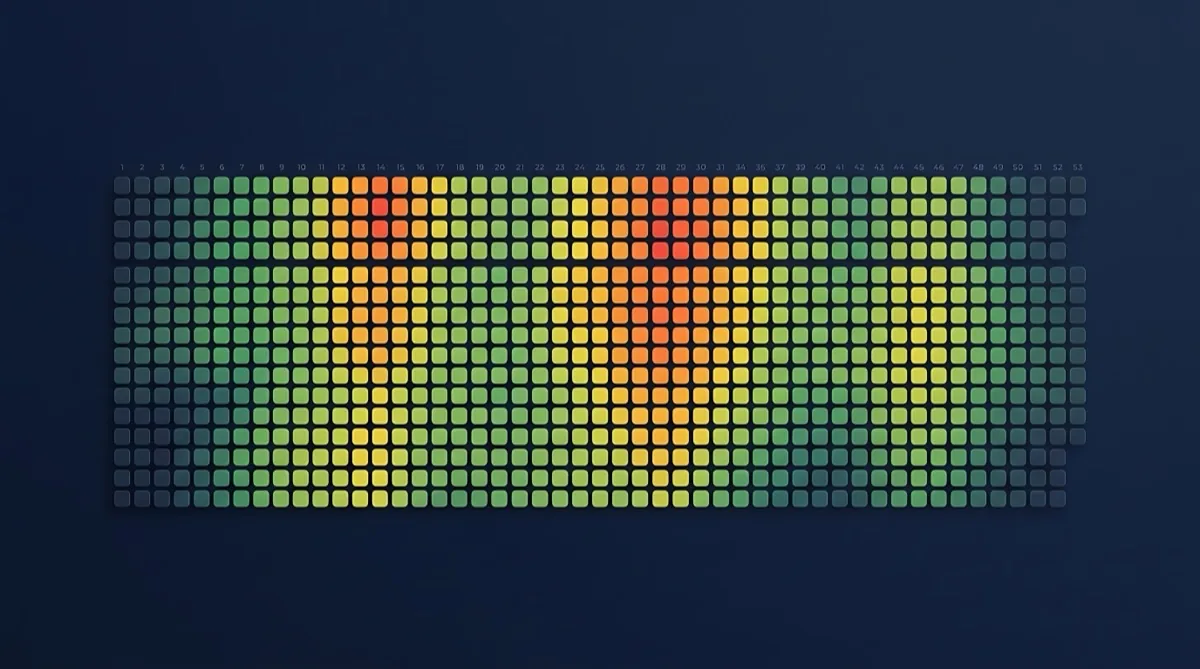
The recommendation is the surface. The orchestration is the deep logic.
Personalization is not recommendation — it's orchestration
Recommending products is a small piece of the problem. The Age of Behavioral Personalization demands something more ambitious: orchestrating the entire experience according to user movement.
Recommendation is the surface. Orchestration is the deep logic. This is where traditional platforms stumble, because they weren't created to coordinate behavior in real time.
Behavioral personalization requires a Decision Layer
To operate behavioral personalization, a company needs something that doesn't natively exist in any CMS, CRM, or marketing cloud: an intelligent layer capable of observing, interpreting, and deciding.
Without this layer, personalization is cosmetic. With it, personalization is behavioral.
The hidden challenge: digital wasn't built to be alive
The biggest difficulty isn't AI. It's the fact that most digital experiences still operate as fixed pages, rigid funnels, static content, linear interfaces, and manual rules. This model doesn't understand behavior, because it wasn't born to understand.
Digital needs to change alongside the user. And this isn't done with widgets, it's done with architecture.
Behavioural personalisation is, above all, a structural achievement.
Companies adopting behavioral personalization create structural advantage
When a company learns to interpret behavior, it gains higher lifetime value, reduced friction, more natural conversions, more efficient operations, products that evolve with the customer, faster decisions, less costly marketing, and experiences that feel intuitive.
Competitors can copy ads, features or design. But they cannot copy architecture, behavioural data, adaptive models and real-time decisions.
Conclusion: real personalization doesn't happen in the interface, but in behavior
The Age of Behavioral Personalization redefines everything we've learned about experience: we don't personalize profiles, we personalize movements; we don't prioritize static data, we prioritize signals; we don't follow fixed rules, we follow intention; we don't build flows, we build adaptive systems.
The personalization of the future isn't about technology. It's about interpreting the human in real time. Welcome to the new era.
"The personalization of the future isn't about technology. It's about interpreting the human in real time. Welcome to the new era."
Continuity: Intelligence, Engineering and Strategy
The thinking behind this article connects directly to Code and Soul's vision: systems that learn, platforms that evolve, and applied intelligence that transforms complex operations into sustainable competitive advantage.