
Critical Platforms
Digital platforms that cannot go down.
When the digital is a critical part of the business, engineering is not a detail. It is responsibility.
We design, operate and evolve digital platforms of high volume, high complexity and real impact on the business.
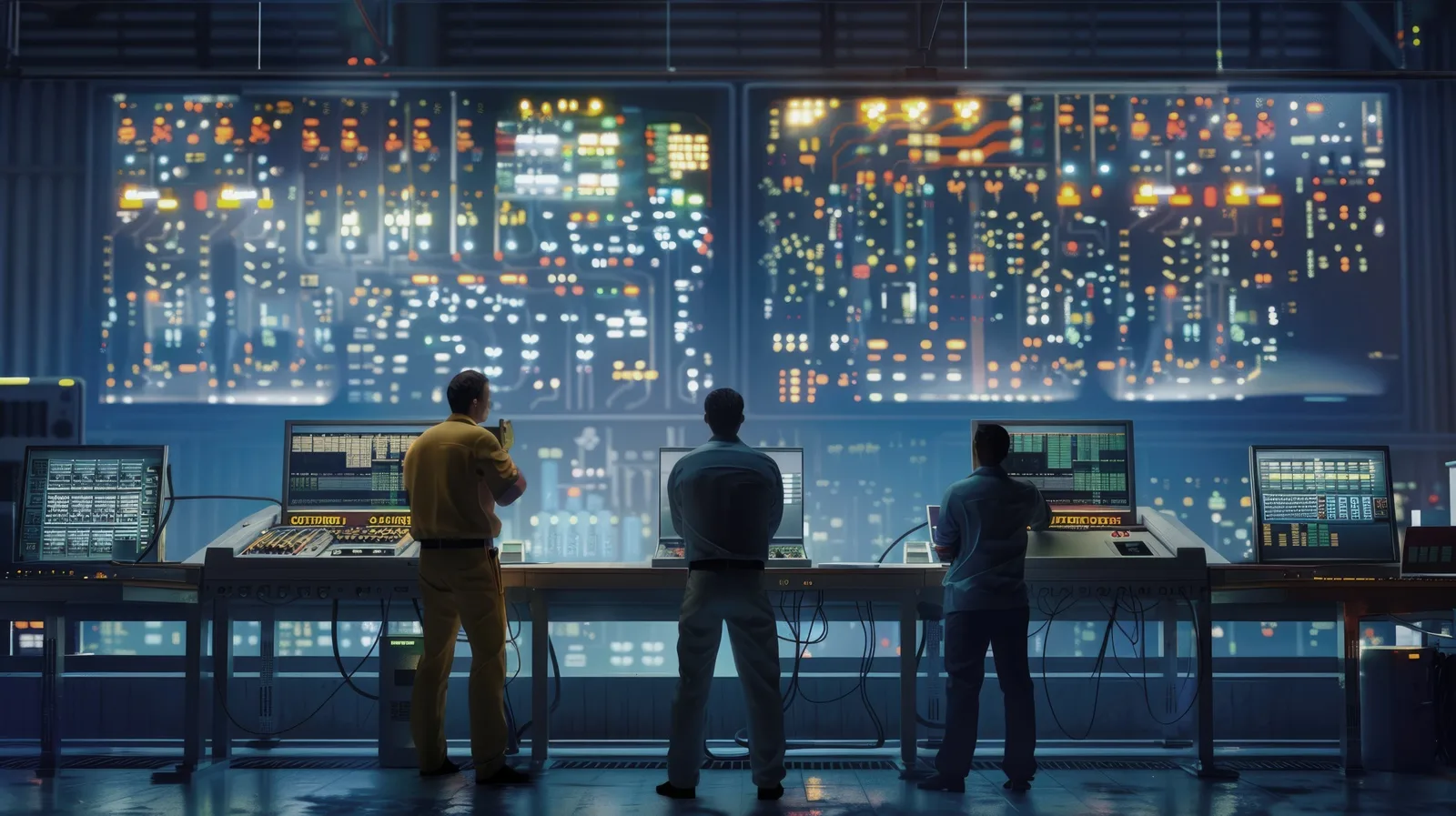
The Real Problem
Downtime is not a technical problem. It is a business problem.
On critical digital platforms, every second offline impacts operation, reputation, sales and trust.
The risk rarely lies only in the infrastructure. It is born from the lack of engineering, governance and predictability.
Critical Platforms
What sets an ordinary site apart from a critical platform
- High volume of simultaneous access
- Direct business dependency
- Multiple teams operating content
- Integration with core systems
- Zero tolerance for instability
If one of these points is true, your platform cannot be treated as "just a website".
A critical platform is not delivered. It is operated, every day.
Projects end. Operation does not. What follows is what we do once the system is live, which is where the difference between a supplier and a partner shows up.
Measured availability
An agreed availability target, measured from an external probe and not from our own dashboard. Whoever measures their own service measures what suits them.
When "it is up" has to be a number, not an impression
Observability
Logs, metrics and traces, linked together: from the error the user saw to the line that caused it, without rebuilding the path by hand.
When nobody can say what happened at three in the morning
Incident response
Defined severity, who calls whom, and a record of what was done. Afterwards, the cause written alongside the fix, so the same incident does not return under another name.
When an outage becomes a meeting instead of a procedure
APIs and service contracts
A versioned contract between parties, compatible change by default, and reconciliation between sender and receiver. A microservice without a contract is a distributed monolith.
When a change in one service breaks another
Capacity and peak
Sizing for the real peak and not the average, with auto-scaling where it fits and cost that follows usage instead of fear.
When your highest-revenue date is your highest-risk date
Change in production
Shipping without a 3am window: small, reversible change, with verification before and planned rollback. High frequency is a consequence of low risk, not the other way round.
When shipping became an event nobody wants to schedule
None of this appears in a project quote, and all of it is what separates a system that lasts from one that was delivered.

Downtime is not a technical problem. It is a business problem.
Once someone calculates the cost of an hour offline, architecture stops being a matter of technical preference.
Our Approach
Engineering first. Always.
We do not start with layout.
We do not start with tooling.
We start with architecture, discipline and operational clarity.
Critical platforms demand sound technical decisions, well-defined processes and continuous responsibility.
Operation vs Project
Most deliver projects. We operate platforms.
Projects end. Platforms continue.
We take responsibility for the continuity, evolution and stability of the digital environment.
- Solid architecture
- Content governance
- Performance at scale
- Continuous evolution
Designed for high-volume environments and continuous operation.
Technology Stack
Technology chosen for environments where failing is not an option.
We work with a proven stack for high scale and high complexity:
- Drupal as an enterprise content platform
- Acquia for governance, performance and security
- Design Systems as operational infrastructure
- Controlled low-code to accelerate without losing control
- Integrations with ERP, CRM and critical systems
Technology not as promise. As sustenance.

Why Code and Soul
When the platform is critical, the partner also needs to be.
- Operation in high-volume environments
- Real operational responsibility
- Senior engineering, no improvisation
- Long-term vision
- Clear communication between business and technology
The decision
When this is worth it, and when it is too expensive.
Worth it when
- An hour offline carries a cost someone on the board can actually calculate
- Volume is high enough that problems show up in production, not in testing
- The platform has to change while it is live, with no maintenance window
- Someone inside is answerable for the operation after delivery
Not worth it when
- The product is still looking for its users: architecture for scale that never arrived is money standing still
- Failure tolerance is high and an hour offline changes nothing in the month
- The expectation is that engineering will solve a problem that belongs to the process
The question is not whether your platform can go down. It is what the hour it goes down costs, and whether anyone has worked that out.
This infrastructure is ours, not a slide.
- 108
- CloudFormation stacks in active operation
- 252
- Lambda functions sustained in production
- 170
- DynamoDB tables in operation
- 15
- named specialists, senior and lead
- 3
- own products running at scale
- 6
- years operating, without interruption
Figures from our own AWS account and our own team, not from a client project. That is the difference between operating and advising, and it is why we can publish them without asking anyone.
Where this has run
The offer above has proof, and the proof has an address.
Tell us where failing is not an option.
High volume, critical integration, an operation that cannot stop. The conversation starts with what already exists.
Engineering is not decoration. It is direction.