The Architecture of Experiences
Experience is not the interface. Experience is the entire system speaking to the user, in silence.
Code and Soul
Engineering Team
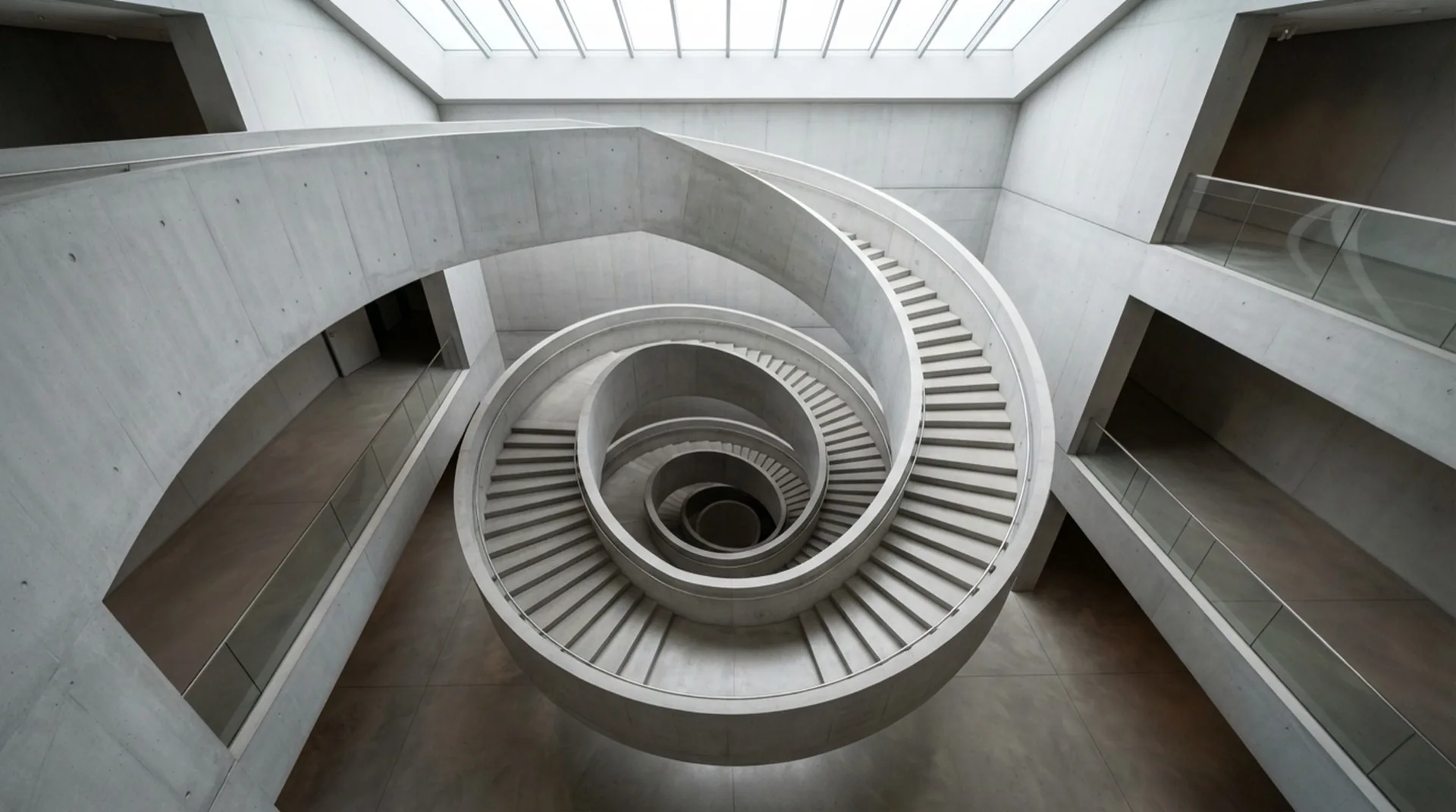
There is a profound confusion in the digital industry: the idea that user experience is synonymous with beautiful screens, polished navigation, elegant micro-interactions, and impeccably aligned components. All of this is important. But all of this is superficial.
Real experience happens behind the interface, in the decisions, the integrations, the flows, the delays, the errors, the gaps, the rules, the behaviour of the system. Experience is an architectural phenomenon before it is an aesthetic one.
UX is not interface design, it is the design of systemic behaviour. UX is architecture.
Experience begins where design ends
Every great digital experience is born from the same source: coherence. Coherence between what the user wants, what the system can do, what the business needs, and what the architecture supports. Isolated design produces fragile experiences. Isolated architecture produces systems disconnected from reality.
The stitching between aesthetics and structure doesn't happen on screen. It happens in thinking.

When a user does something simple, they are moving across invisible architectural layers.
Experience is a systemic phenomenon, not graphic
The user experiences the system as a continuous phenomenon. But the system is, in practice, a set of independent parts, fragmented flows, distributed services, decisions made in different places, diverse latencies, and multiple points of failure.
Experience is the result of what the system does, not what the design looks like.
The modern UX paradox: invisible experience, absolute impact
What differentiates a common experience from a memorable one? It's not color. It's not curves. It's not icons. It's the sensation of fluidity, the deep feeling that everything makes sense. This fluidity only exists when the experience is designed as a functional ecosystem.
SYNQi³ is born exactly at this point. Not to "beautify the experience," but to make it conscious. The user doesn't see SYNQi³. They feel it.

SYNQi³ turns data into context, context into decision, decision into action, and action into experience.
UX doesn't deal with screens, it deals with expectations
The user doesn't interact with components. They interact with expectations: speed, clarity, response, personalization, stability, respect for their time, continuity regardless of channel, intelligence in small actions, absence of negative surprises.
These expectations are not the UI designer's responsibility. They are architecture's responsibility. UX is only as good as the structure that sustains it.
Systems Thinking as the core of experience
Systems thinking means seeing the product as an organism: living, interconnected, composed of interdependent parts, influenced by cycles, limits, and feedback. Experience only becomes scalable when each part knows its role.
When UX connects with systems thinking, experiences emerge that don't break, don't contradict internal rules, don't require unnecessary cognitive effort. They are firm experiences and, paradoxically, invisible.
Experience architecture: the Code and Soul method
Within Code and Soul, we treat UX as an architectural product composed of three layers: User Behavior (People), System Behavior (Data + Decisions), and Interface Behavior (UX). SYNQi³ functions as the mediator between human biology and machine logic.

The interface does not create experience. The interface manifests experience.
Experience is alive: evolves, adapts, learns
A common mistake is treating UX as a closed project. Real experiences are adaptive organisms. They change as data increases, behavior changes, new channels emerge, the business evolves. Architecture's role is to allow this evolution without collapse.
When architecture and UX move together, the experience stays alive, and always current.
Conclusion: The future of experiences is architectural
As systems become more complex and distributed, the line between UX and engineering disappears. Design no longer lives in Figma. It lives in pipelines, models, events, and rules that shape the user's invisible journey.
The future of experiences is not visual. It's structural. And it will be determined by the intelligence with which we build the systems that sustain human behavior.
"The future of experiences is not visual. It's structural. And it will be determined by the intelligence with which we build the systems that sustain human behavior."
Continuity: Intelligence, Engineering and Strategy
The thinking behind this article connects directly to Code and Soul's vision: systems that learn, platforms that evolve, and applied intelligence that transforms complex operations into sustainable competitive advantage.