From Data to Decisions
Modern digital architecture has a structural gap, a void between "knowing what happened" and "acting the moment it's happening."
Code and Soul
Engineering Team
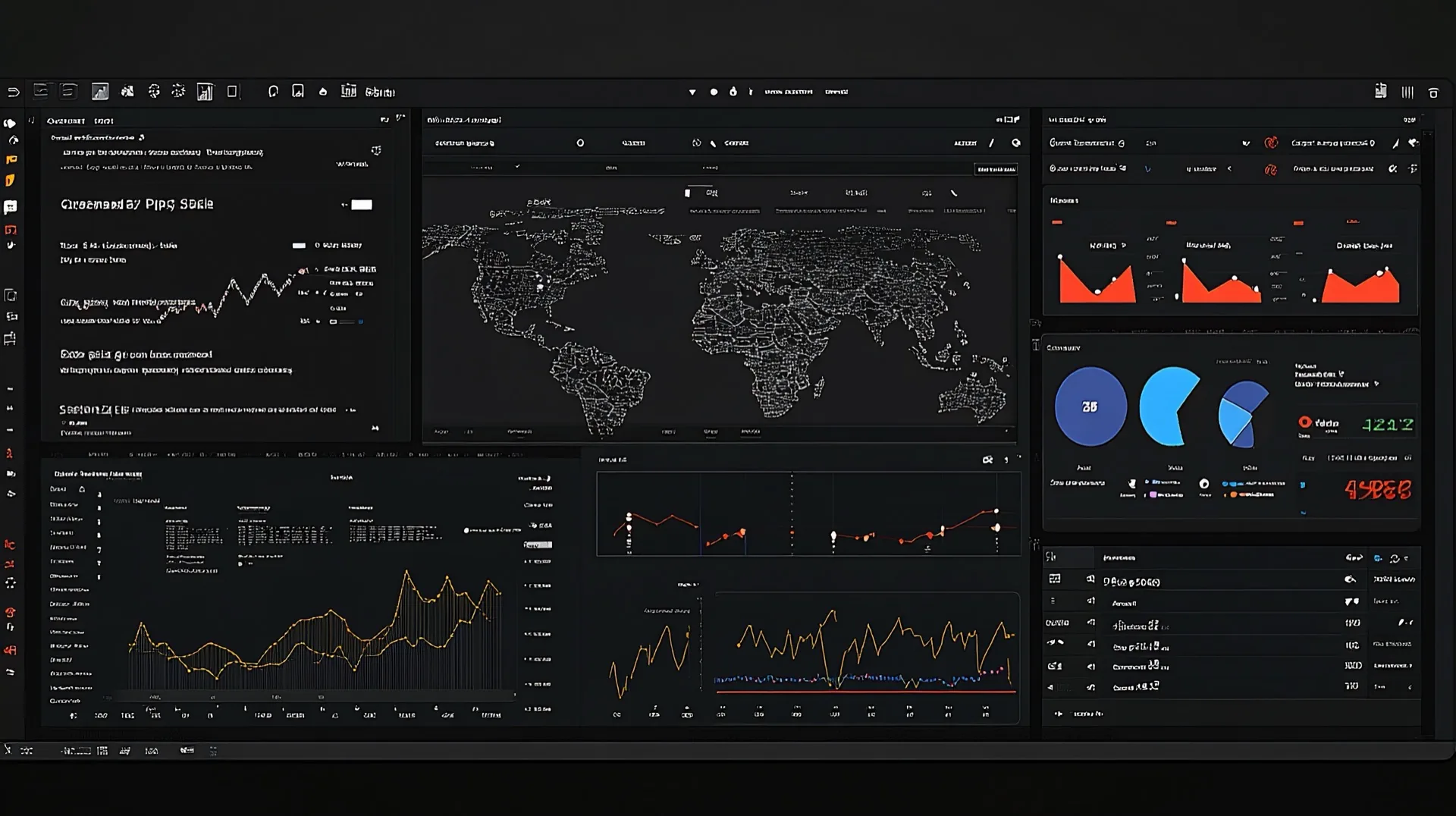
Over the last decade, the corporate market made a massive effort to "become data-driven." Data lakes, analytics squads, dashboards, pipelines, workflows, BI structures, engineering teams, governance, catalogs: an entire arsenal dedicated to collecting, storing, cleaning, and visualizing data. But despite all this, something hasn't changed: decisions remain slow, disconnected, and most often based on intuition. Not due to lack of data, but because data doesn't decide.
And this is the point almost nobody admits: modern digital architecture has a structural hole, a gap between "knowing what happened" and "acting at the moment it is happening".
The problem lies in the absence of continuous interpretation
Companies collect data with surgical precision. They know how many people clicked, how long they stayed, what they bought, what they searched, what they abandoned, who complained, who engaged, who disappeared. But there's a radical difference between telemetry and intelligence.
Telemetry describes. Intelligence interprets. Most "data-driven" structures stop at description.

Telemetry describes. Intelligence interprets.
Dashboards are retrospection, decisions require anticipation
Dashboards are great for understanding yesterday. But competitive decisions happen in the now. User behavior changes in seconds. The opportunity window does too. Intent appears and disappears too quickly to depend on manual analysis.
Churn has early signals. Abandonment has predictable patterns. Conversion has micro-intents. Retention has sensitive triggers. Friction has silent origins.
When a decision depends on a human looking at a dashboard, it's already too late.
The missing layer: decisions, not data
The real gap isn't technical. It's structural. Traditional architectures organize like this: collection → storage → engineering → BI → product/marketing/support. There's an element missing between BI and the business: a layer that transforms interpretation into decision and decision into action.
This is the Decision Layer, the missing component for data to stop being input and become mechanism.

The Decision Layer turns interpretation into action.
Without the Decision Layer, experiences become fragments
The absence of this layer generates familiar symptoms: disconnected automations, inconsistent personalization, campaigns that don't reflect real behavior, products that don't respond to context, support that ignores history.
Companies think they have an operational problem. But the problem is architectural. They're trying to create holistic experiences using isolated pieces.
The Decision Layer: where telemetry becomes action
The logic of this layer is simple and radical: every event generated by the user should have a response. It's not "using data." It's "using data as an active mechanism of the ecosystem."
The Decision Layer operates on three levels: interpretation, understanding what the user is signaling; orchestration, deciding what should happen; activation, executing it in product, marketing, or support.
The structure that enables continuous decisions
The Decision Layer emerges as a response to the gap between data and action, functioning as an interpretive brain, an experience orchestrator, a translator between intent and action.
Real-time event processing, context engine, behavior unification, dynamic rules, intelligent automations, intent-sensitive personalization.
With this structure, the company stops using data to "understand the past" and starts using it to guide the present and shape the future.

The future is not data-driven, it is decision-driven.
The future isn't data-driven — it's decision-driven
The market discourse still revolves around data. But the real value lies in the ability to decide with it. Companies that don't create a Decision Layer will remain trapped in the same cycle: data → report → meeting → delay → lost opportunity.
Companies that build this layer gain distributed decisions, continuous intelligence, coherent experiences, products that respond to the user, and the ability to anticipate movements instead of chasing them.
"The transition from "data-driven" to "decision-driven" is the natural, and inevitable, evolution. This is where technology stops being a tool and becomes applied intelligence."
Continuity: Intelligence, Engineering and Strategy
The thinking behind this article connects directly to Code and Soul's vision: systems that learn, platforms that evolve, and applied intelligence that transforms complex operations into sustainable competitive advantage.