When Operations Start Responding
The problem is not the absence of data. It is the inability to transform signals into response while they still matter.
Code and Soul
Engineering Team
There is a silent contradiction in hospitality.
There has never been so much information available. And even so, few operations manage to decide at the right moment.
Orders are recorded, payments are processed, behaviours are captured, feedback is collected. Systems work. Reports exist. Dashboards are updated.
But the decision still arrives afterwards.
By the time it arrives, the customer has already left. By the time it arrives, the experience has already happened. By the time it arrives, the impact has already settled.
The problem is not the absence of data. It is the inability to turn signals into a response while they still matter.
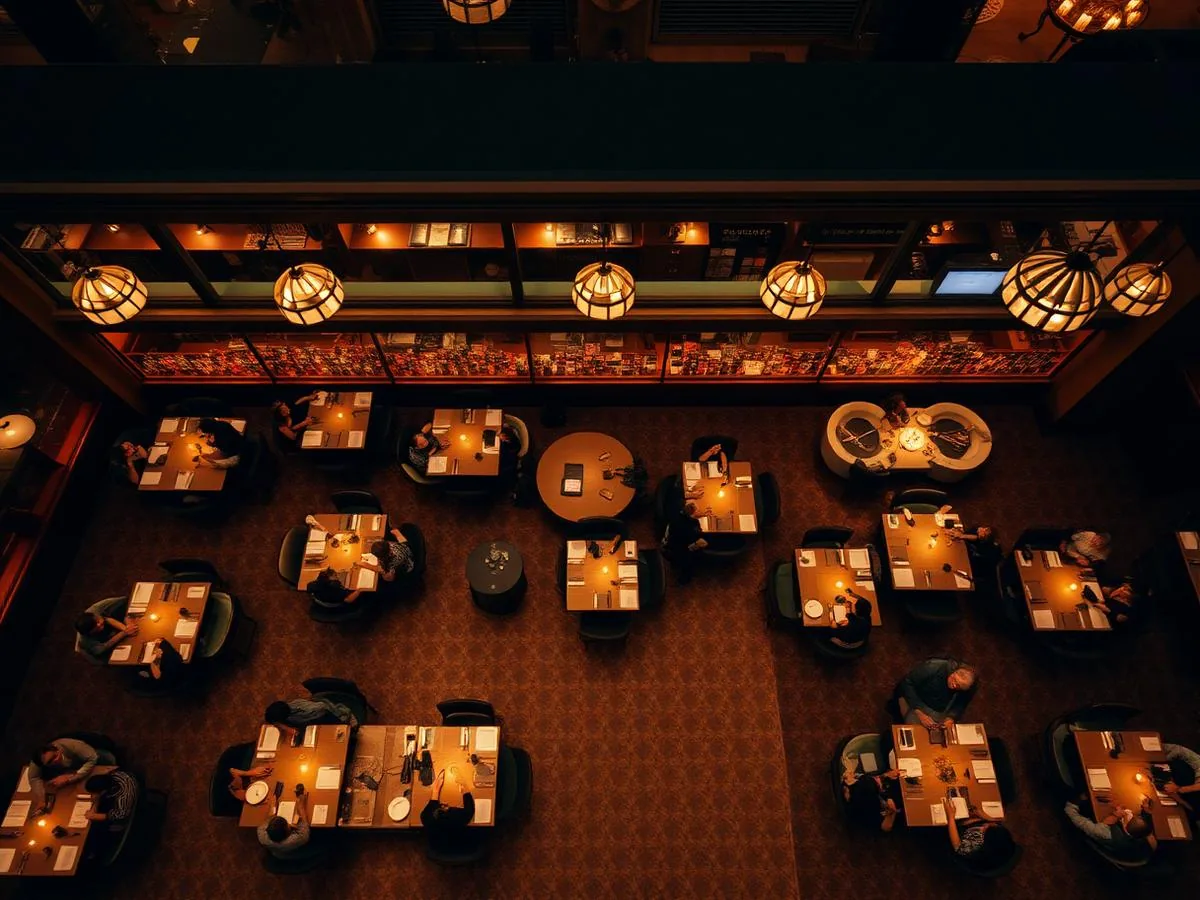
The invisible fragmentation of the operation
For years, the technological evolution of the sector happened in layers.
Transactional systems came along to organise orders, inventory and billing. Relationship tools appeared to handle communication and campaigns. Digital interfaces were added to make access and consumption easier.
Every advance solved a specific problem. None solved the main one.
The operation stayed fragmented.
What happens on the floor does not talk to what happens in the system. Customer behaviour does not change the decision at the moment the customer is present. The history exists, but it rarely crosses into the experience in real time.
The data circulates. The decision does not.
The structural limit of analysis
Much of the recent sophistication came from the ability to measure.
More complete dashboards. More detailed reports. More refined metrics.
But they all share the same limit: they explain what already happened.
Analysis organises the past. It does not interfere with the present.
That difference is subtle, but structural. As long as the operation depends on reading to act, it will always be behind what is happening.
"When a decision depends on analysis, it always arrives late."
The moment the operation stops waiting
The change begins when the operation stops depending on human interpretation to react.
This is not about speeding up reports or improving visualisations. It is about changing the logic.
Events stop being records. They become triggers.
What used to be observed becomes processed. What used to be interpreted becomes answered.
The operation starts reacting while it happens. Not as an exception. As the default.
Experience as a consequence of the decision
That changes the nature of the experience.
It stops being defined by the interface and starts being defined by the response.
What the customer sees, receives and perceives is not the result of a fixed flow. It is a direct consequence of how the operation reads that specific moment.
Context stops being a detail. It becomes the base.
Two customers at the same table can get different experiences, not because the system was configured that way, but because the operation recognises different states.
Personalisation stops being aesthetic. It becomes operational.

When architecture meets the floor
This shift stops being conceptual when it meets the operation.
At Fabrik7, every interaction began to be treated as part of a continuous flow.
The entry point is not a system. It is the moment.
The customer arrives, identifies themselves, interacts. From that instant on, the experience stops being generic.
History stops being an archive and becomes context. Behaviour stops being a record and becomes a signal.
The menu reorganises itself. The recommendations adjust. The operation responds.
None of it happens as an isolated event. All of it happens as continuity.
What the customer does influences what the operation does next. And what the operation does starts influencing what the customer will do afterwards.
There is no longer a separation between interaction and decision.
What changed structurally
Before, the operation was made of independent events.
Order. Payment. Feedback. Return.
Now those events start forming a cycle.
Every action generates a signal. Every signal changes the next step. Every response generates learning.
The system stops recording what happened and starts influencing what is still happening.
This transition does not add a layer. It changes the logic.
"Experience is not what is shown. It is how the operation responds."
Identity and continuity
One of the biggest limitations of traditional operations has always been the absence of continuity.
Even when there was history, it did not reach the moment of decision. Even when there was data, it did not arrive with enough context to guide an action.
The experience used to be episodic.
In this new model, it becomes cumulative.
The customer stops being a sequence of visits. The customer becomes a continuous trajectory.
Every interaction adds context. Every response refines understanding. Every decision improves the next one. The operation starts recognising, not just recording.
The physical operation stops being opaque
For a long time, digital sophistication was concentrated outside the physical environment.
Campaigns, platforms, interfaces, everything evolved. The floor stayed opaque.
That barrier starts to disappear when the physical operation becomes part of the same decision flow.
What happens at the table stops being invisible. What happens in service stops depending exclusively on human perception.
The operation becomes aware of what is happening while it happens. And, more importantly, it starts acting on it.

Implications of a new logic
This shift is not incremental.
It does not only improve efficiency. It changes the behaviour of the operation.
Decisions stop being one-off and become continuous. Experience stops being defined in advance and starts being built in real time.
The operation stops reacting to the past. And starts operating in the present.
What is emerging is not a new tool.
It is a new way of operating.
In an environment where time, margin and experience define competitiveness, the ability to respond while something is happening stops being a differentiator.
It becomes the baseline.
Hospitality, which has always depended on human sensitivity, begins to take on a new layer: the ability to perceive, decide and act with continuity.
Not afterwards. During.
"Experience is not what is shown. It is how the operation responds."
Continuity: Intelligence, Engineering and Strategy
The thinking behind this article connects directly to Code and Soul's vision: systems that learn, platforms that evolve, and applied intelligence that transforms complex operations into sustainable competitive advantage.